

Understanding Fractional CFO Pricing Models
Fractional CFO is a part-time executive engagement where a senior financial leader provides strategic oversight without the commitment of a full-time hire. This model allows companies to access C-suite expertise on a flexible basis. The two primary pricing structures are monthly retainers and hourly billing. Each model serves different business needs and scales differently as a company grows.
Most established fractional CFO firms use a retainer model for ongoing strategic support. This provides consistent access to financial leadership for a fixed monthly fee. Hourly rates are more common for discrete projects, such as a one-time audit or a specific fundraising round. Understanding the distinction is critical for budgeting. A retainer buys time and access, while hourly billing buys specific deliverables.
The cost of a fractional CFO is not just a line item. It is an investment in financial clarity and strategic direction. For growing businesses, the cost of poor financial visibility often far exceeds the cost of professional guidance. This section establishes the baseline for how these services are priced in the current market.
Monthly Retainer Pricing Structures
Scope of Services in Retainers
Factors Influencing Retainer Cost
Several factors drive the cost of a monthly retainer. Business complexity is the primary driver. A multi-location business with complex revenue streams will require more time than a single-location service business. Industry expertise also plays a role. A fractional CFO with specific experience in a regulated industry may command a premium. The level of seniority of the CFO is another key factor. A partner-level CFO will cost more than a senior manager.
Why Retainers Offer Predictability
Retainers provide budget predictability. You know exactly what you will pay each month. This is crucial for cash flow management. It also ensures consistent access to your CFO. You are not paying for sporadic advice. You are paying for a dedicated partner who understands your business deeply over time. This continuity is a significant value proposition that hourly billing cannot match.
Hourly Rates and Project-Based Work
When to Use Hourly Billing
Hourly billing is appropriate when you have a clear, defined problem. If you need a specific report or a one-time analysis, hourly work is efficient. It allows you to pay only for the time spent. However, it lacks the strategic continuity of a retainer. The CFO is not embedded in your business. They are solving a specific puzzle. This can be effective for isolated issues but less effective for ongoing growth challenges.
Risks of Hourly-Only Engagements
There are risks to relying solely on hourly billing. Without a retainer, the CFO may not have the context to make deep strategic recommendations. They may focus on the immediate task rather than the long-term health of the business. Additionally, hourly rates can add up quickly if the project scope is not clearly defined. It is essential to have a clear statement of work when using hourly billing. This prevents scope creep and unexpected costs.
Retainer vs Hourly: A Cost Comparison
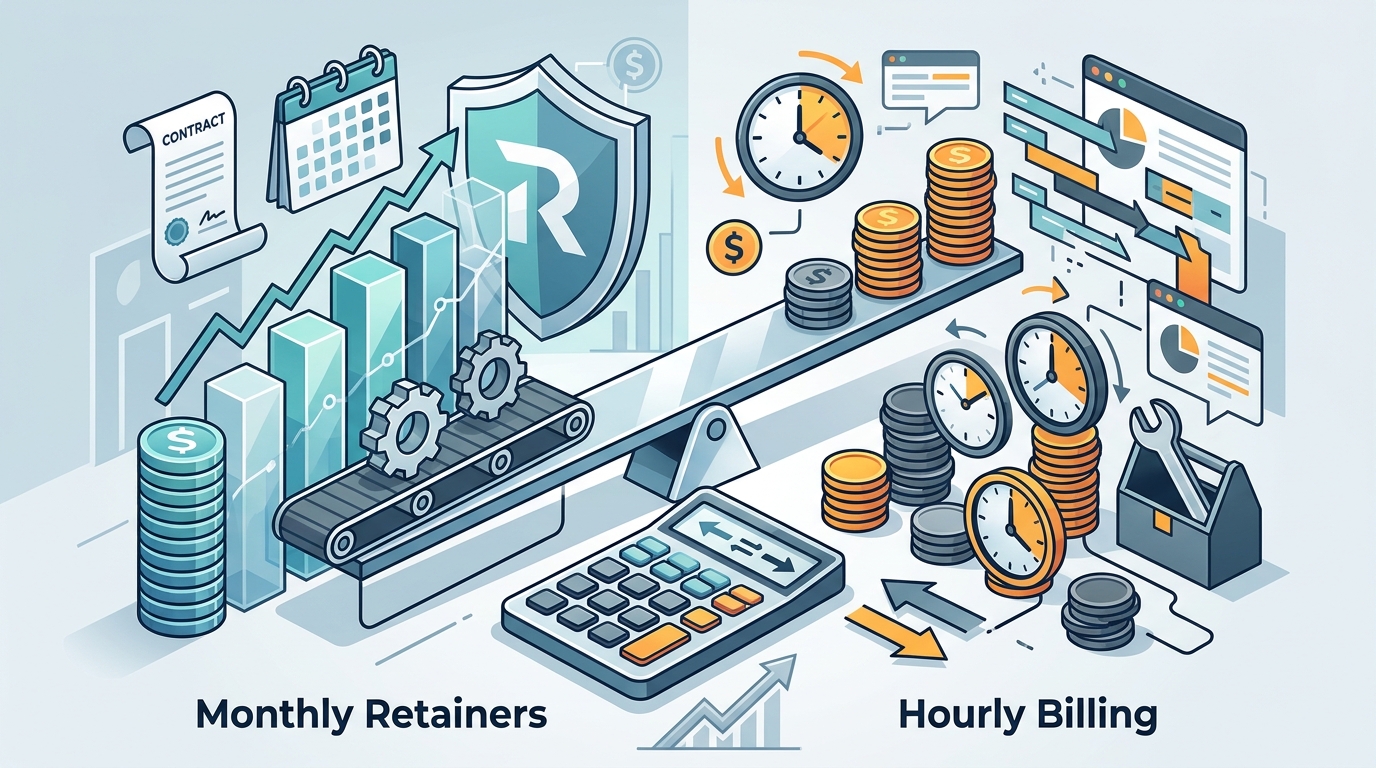
Choosing between a retainer and hourly billing depends on your business needs. The table below summarizes the key differences. This comparison helps you decide which model aligns with your current stage of growth and your financial goals.
| Best For | Ongoing strategic support and growth | Specific, one-time projects |
| Budget Predictability | High (Fixed monthly fee) | Low (Variable based on hours) |
| Strategic Continuity | High (Embedded partner) | Low (Task-focused) |
| Access to CFO | Consistent and prioritized | As needed, subject to availability |
Measuring the Value of Fractional Leadership
The cost of a fractional CFO should be evaluated against the value it creates. This is not just about saving money. It is about making better decisions. Key metrics to track include cash flow improvement, forecasting accuracy, and margin expansion. A good fractional CFO will help you identify inefficiencies and optimize your financial structure.
For example, a fractional CFO might help you renegotiate vendor contracts, reducing costs by 10%. They might also help you improve your cash conversion cycle, freeing up working capital. These are tangible outcomes that justify the investment. Relentless CFO focuses on these measurable outcomes to ensure clients see a clear return on investment.
It is also important to consider the cost of inaction. If you are making decisions without clear financial data, you are taking on significant risk. The cost of a bad decision can be far higher than the cost of professional guidance. This is why many growing businesses choose a retainer model. It provides the safety net of expert oversight.
Key Takeaways
- Retainers are best for ongoing strategic support and growth.
- Hourly billing is suitable for specific, one-time projects.
- Business complexity and industry expertise significantly impact pricing.
- The value of a fractional CFO is measured by improved cash flow and decision quality.
- Always define the scope of work clearly, whether using a retainer or hourly model.
Frequently Asked Questions
What is the average cost of a fractional CFO?
How does a fractional CFO differ from a full-time CFO?
A fractional CFO works part-time and serves multiple clients. A full-time CFO is an employee dedicated to one company. Fractional CFOs are typically more experienced and cost-effective for growing businesses that do not need a full-time executive.
Is a fractional CFO worth the cost?
For most growing businesses, yes. The cost of a fractional CFO is often lower than the cost of a full-time CFO. Additionally, the strategic guidance provided can lead to significant cost savings and revenue growth, resulting in a positive return on investment.
What services are included in a fractional CFO retainer?
Can I switch from hourly to a retainer later?
Yes, many businesses start with hourly work for a specific project and then transition to a retainer for ongoing support. This allows you to test the relationship before committing to a monthly fee.
How do I choose the right fractional CFO firm?
Look for a firm with experience in your industry. Check their track record and client testimonials. Ensure they offer the specific services you need. A firm like Relentless CFO specializes in providing financial clarity and strategic leadership to growing businesses.
Conclusion
Understanding the cost of fractional CFO services is essential for making informed financial decisions. Whether you choose a monthly retainer or hourly billing, the key is to align the engagement with your business goals. A retainer provides ongoing strategic support, while hourly billing is suitable for specific projects. Both models offer access to senior financial expertise without the cost of a full-time hire.
For businesses seeking to improve cash flow, enhance forecasting accuracy, and streamline financial processes, a fractional CFO is a valuable investment. Relentless CFO offers tailored solutions to help you achieve financial clarity and strategic growth. To explore how a fractional CFO can benefit your business, today.