

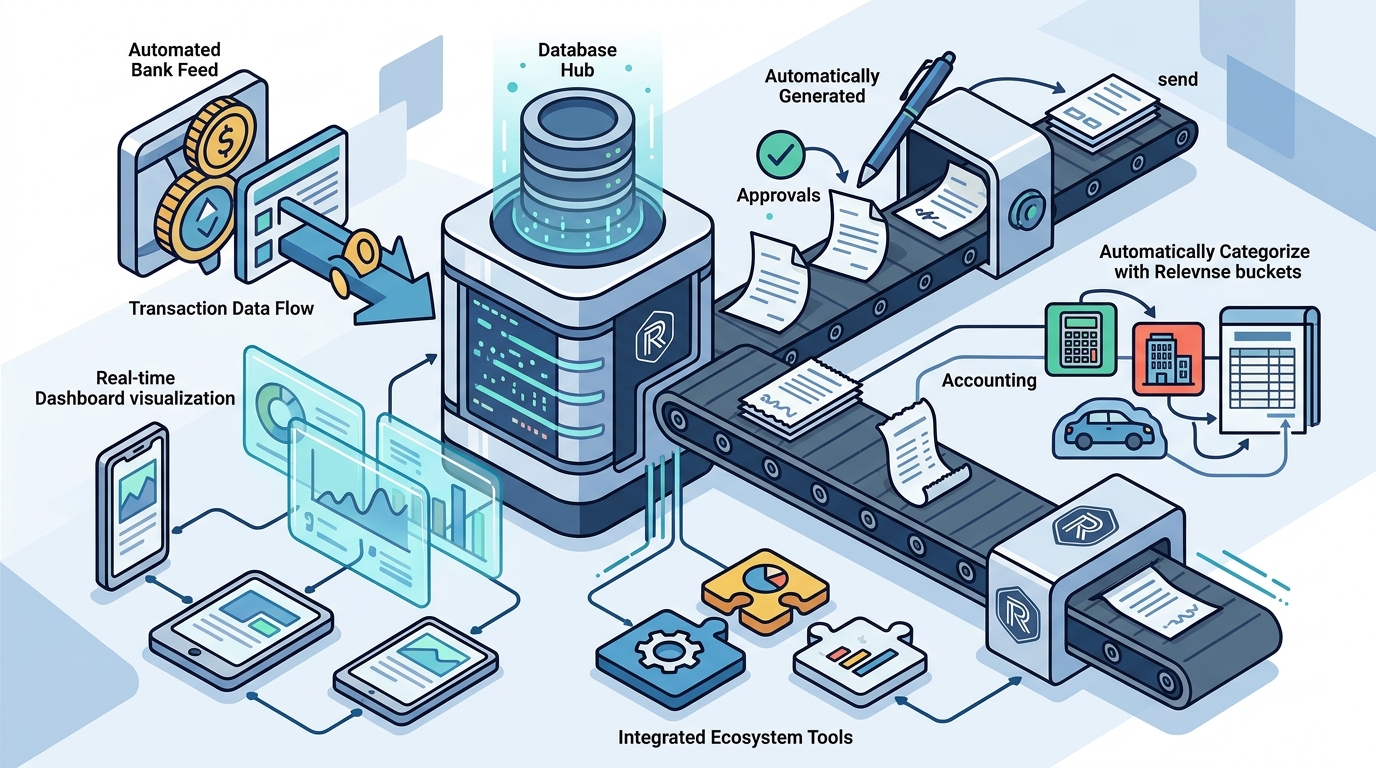
Business owners can leverage cloud accounting features to streamline financial processes by automating data entry, enabling real-time visibility, and facilitating seamless collaboration. This guide covers how to implement automated bank feeds, manage expenses, optimize invoicing, utilize real-time dashboards, enable multi-user collaboration, and integrate ecosystem tools. Relentless CFO provides the strategic framework to ensure these technologies drive measurable financial clarity and operational efficiency for growing businesses.
Automated Bank Feeds
Automated bank feeds are a foundational feature of modern cloud accounting platforms that connect directly to financial institutions to import transactions. This technology eliminates the need for manual data entry, which is a primary source of human error and administrative delay. By syncing transactions in real-time or near real-time, business owners gain an immediate view of cash flow without waiting for end-of-month bank statements. For additional details, review the Fractional CFO for Med.
Reducing Manual Data Entry
Manual reconciliation is time-consuming and prone to mistakes. Cloud accounting systems use secure APIs to pull data from banks and credit card processors. This ensures that every transaction is captured accurately and categorized according to predefined rules. For a growing business, this shift from manual to automated processing frees up significant hours that can be redirected toward strategic growth initiatives. For additional details, review the Fractional CFO for Med.
Enhancing Data Accuracy
Accuracy is critical for reliable financial reporting. Automated feeds reduce the risk of missed transactions or duplicate entries. When data is imported automatically, the system can flag anomalies or duplicates for review. This level of precision supports better decision-making and ensures that financial statements reflect the true state of the business. according to The impact of For additional details, review the Fractional CFO for Med.
Expense Management
Expense management in cloud accounting involves capturing, categorizing, and approving business expenditures through digital workflows. This process moves beyond simple receipt storage to active control over spending. By integrating expense tracking with the general ledger, businesses can maintain real-time visibility into their cost structure.
Digital Receipt Capture
Modern cloud platforms allow employees to capture receipts using mobile applications. These apps use optical character recognition to extract key details such as vendor, amount, and date. This automation ensures that expenses are recorded promptly and accurately, reducing the backlog of unprocessed receipts that often accumulates at month-end.
Policy Enforcement and Approval
Cloud accounting systems enable the enforcement of spending policies through automated approval workflows. Managers can set limits and require approvals for specific expense categories. This structure promotes accountability and ensures that spending aligns with budgetary constraints. It also provides an audit trail that simplifies compliance and tax preparation.
Invoicing and Collections
Invoicing and collections are streamlined through cloud accounting by automating the creation, delivery, and tracking of invoices. This functionality accelerates the cash conversion cycle, which is vital for maintaining healthy liquidity. By reducing the time between service delivery and payment, businesses can improve their cash flow position significantly.
Automated Invoice Generation
Cloud platforms allow for the rapid creation of professional invoices using templates and saved client data. This automation reduces the administrative burden on finance teams. Invoices can be sent via email with a single click, ensuring that billing is timely and consistent. Timely invoicing is a key driver of faster payment collection.
Payment Tracking and Reminders
Tracking outstanding invoices is simplified through automated status updates and payment reminders. The system can send polite, automated reminders to clients who have not paid by the due date. This reduces the need for manual follow-up and helps maintain professional relationships while ensuring that revenue is collected efficiently.
Real-Time Dashboards
Real-time dashboards are visual interfaces that display key financial metrics and performance indicators. These dashboards provide business owners with an immediate understanding of their financial health. Instead of waiting for monthly reports, owners can monitor cash flow, profit margins, and revenue trends as they happen.
Customizable Visualizations
Cloud accounting systems offer customizable dashboards that allow users to select the metrics most relevant to their business. Owners can track key performance indicators such as gross margin, operating expenses, and cash runway. This flexibility ensures that the financial data presented is actionable and aligned with strategic goals.
Data-Driven Decision Making
Multi-User Collaboration
Multi-user collaboration features allow multiple stakeholders to access and work within the same cloud accounting environment. This capability is essential for businesses with distributed teams or those working with external advisors. It ensures that everyone is working from the same set of data, reducing version control issues and miscommunication.
Role-Based Access Control
Cloud platforms provide granular permission settings that allow administrators to define user roles. For instance, a bookkeeper may have full access to data entry, while a manager may have read-only access to reports. This security feature ensures that sensitive financial information is protected while still enabling efficient collaboration.
Seamless Communication
Collaboration features often include built-in communication tools such as comments and task assignments. This allows team members to discuss specific transactions or reports within the context of the data. This integration of communication and data reduces the need for external email threads and keeps all relevant information in one place.
Ecosystem Integrations
Ecosystem integrations connect cloud accounting software with other business applications such as CRM, payroll, and project management tools. These integrations create a unified data environment that eliminates silos and manual data transfers. By connecting these systems, businesses can achieve a seamless flow of information across their operations.
Breaking Down Data Silos
Data silos occur when information is trapped in isolated systems, making it difficult to get a holistic view of the business. Integrations solve this problem by allowing data to flow automatically between platforms. For example, sales data from a CRM can be synced directly to the accounting system, ensuring that revenue is recorded accurately and timely.
Enhancing Operational Efficiency
| Automated Bank Feeds | Eliminates manual data entry | Improves accuracy and speed of reconciliation |
| Expense Management | Enforces spending policies | Provides real-time visibility into costs |
| Invoicing and Collections | Accelerates cash collection | Improves cash flow and liquidity |
| Real-Time Dashboards | Offers immediate financial visibility | Supports proactive decision-making |
| Multi-User Collaboration | Enables secure team access | Reduces miscommunication and version control issues |
| Ecosystem Integrations | Connects disparate systems | Eliminates data silos and manual transfers |
Key Takeaways
- Automated bank feeds eliminate manual data entry, improving accuracy and saving time.
- Digital expense management enforces policies and provides real-time cost visibility.
- Automated invoicing and reminders accelerate cash collection and improve liquidity.
- Real-time dashboards empower owners to make proactive, data-driven decisions.
- Multi-user collaboration features ensure secure, efficient teamwork across distributed teams.
- Ecosystem integrations break down data silos, creating a unified operational environment.
- Cloud accounting enhances efficiency and accessibility to up-to-date information, fostering better resource allocation.
Frequently Asked Questions
What is cloud accounting?
Cloud accounting is a software-based system that allows businesses to manage their financial data online. It provides real-time access to financial information from any device with an internet connection.
How do automated bank feeds work?
Automated bank feeds use secure APIs to connect accounting software with financial institutions. They automatically import transactions, eliminating the need for manual data entry.
Can cloud accounting improve cash flow?
Yes, by automating invoicing and collections, cloud accounting accelerates the cash conversion cycle. This helps businesses maintain healthier liquidity and manage their cash flow more effectively.
What are the benefits of real-time dashboards?
Real-time dashboards provide immediate visibility into key financial metrics. This allows business owners to make proactive decisions rather than relying on historical monthly reports.
How does multi-user collaboration enhance security?
Multi-user collaboration features include role-based access control. This ensures that only authorized personnel can view or modify specific financial data, enhancing security and compliance.
Why are ecosystem integrations important?
Ecosystem integrations connect accounting software with other business applications. This eliminates data silos and reduces manual data transfers, improving overall operational efficiency.
How can Relentless CFO help with cloud accounting implementation?
Conclusion
Leveraging cloud accounting features is essential for modern businesses seeking to streamline their financial processes. By implementing automated bank feeds, robust expense management, efficient invoicing, real-time dashboards, multi-user collaboration, and ecosystem integrations, business owners can achieve greater financial clarity and operational efficiency. Relentless CFO offers the expertise needed to navigate this transition, ensuring that your financial infrastructure supports your long-term growth strategy. To explore how these solutions can benefit your business, for a personalized consultation.